


Equity Q&A
Q: What do you mean by equity?
A: When we use the word equity, we mean the prioritization of resources to most effectively support the needs of students in the program. The children we serve are from many different backgrounds, some of which are associated with advantages and disadvantages in the education system. Our work addresses the fact that deep social, economic and racial inequities in our country and state make it harder for some children to succeed compared to others; therefore, children need different inputs to reach the same outcome.
Some examples of what this looks like in practice include:
- Research tells us that children of color will have increased comprehension and engagement with books that reflect their culture and identities. By prioritizing equity, we allocate resources for these more expensive and high quality titles because we know that it’s the most effective way to support students of color.
- Students of color and students from low-income households are disproportionately impacted by the education gap. Prioritizing equity means focusing our program growth in a way that reaches these populations first and foremost, investing our resources in sites and students who face the greatest challenges to academic success because of a system that limits their opportunities and access.
Q: Why is it important for SMART to address equity?
A: SMART’s vision is an Oregon in which all children can realize their full potential through reading. Gaps in access to housing, employment, health care and a myriad of other racial and economic disparities mean that children are not starting with the same access to opportunities. Literacy breaks down barriers and opens the door to opportunity, which means that by providing reading support and access to books where they’re needed most, we have a tremendous opportunity to level the playing field and create better, more equitable outcomes for kids.
Q: I hear the phrases “opportunity gap,” “achievement gap” and “education gap” used frequently in conversations about educational equity. What do these phrases mean and how are they similar and/or different?
A: SMART uses the term Education Gap to refer to the inequities students of color face in educational outcomes. Oregon’s education gap persists throughout all key milestones that determine our students’ academic and life success, including third-grade reading levels and high school graduation rates. (Click here to learn about Oregon’s education gap.) We can do better for our kids, and SMART has a role to play in the solution.
The Opportunity Gap is the disparity in access to quality schools and the resources needed for academic success, such as early childhood education, highly prepared and effective teachers, college preparatory curricula, and equitable instructional resources.[1] Think of it as the broadest, most encompassing term for describing the inequities communities of color face when it comes to resources, access and opportunities. For a toolkit on the Opportunity Gap, click here.
The Achievement Gap occurs when one group of students (such as, students grouped by race/ethnicity, gender) outperforms another group and the difference in average scores for the two groups is statistically significant (that is, larger than the margin of error). The phrase “achievement gap” is widely used; however, it’s inherently problematic because it addresses only academic outcomes superficially without regard to the deep, underlying and inherently racist systems that led to the outcomes. The phrase inaccurately implies that students of color aren’t capable of achieving the same outcomes as their white peers. Click here to read more about the problematic nature of the “achievement gap” term.
Q: How can books and reading contribute to equity?
A: In the span of children’s lives, there are countless experiences and interactions along the way that shape their identities and beliefs about their own intelligence and abilities. Research shows that access to appropriate cultural content in reading materials, as well as reading materials in a child’s first language, can have a significant impact on literacy and comprehension results. We are committed to providing children in SMART with a positive, affirming experience that honors their cultural identity and background and builds their reading skills, self-confidence, and enthusiasm for reading. To learn more about inclusive books at SMART, click here.
Q: What role do books play in a child’s identity?
A: Research suggests that access to a diverse mix of books plays an important role in building self-esteem (mirror books) as well as promoting empathy and understanding of cultures different from one’s own (window books).
Mirror books: Also known as culturally relevant books, mirrors allow readers to see images that reflect their own lives. Finding their own cultures, identities, and experiences in books helps children develop a positive sense of self, and having familiar and relatable characters and events improves their reading comprehension and language skills.
Window books: Windows allow readers to see the lives of people with experiences different from their own. Having access to books that are inclusive of a wide variety of identities, cultures, and experiences helps children to develop empathy attitudes of openness around difference. A book can be both a mirror for one child, and a window for another.
Q: Why do you talk more about race than other factors that influence a kid’s success, like poverty?
A: We lead with a focus on race because racial inequities are generally among the most severe and harmful to children and their educational outcomes; however, we recognize that other forms of inequity and discrimination exist for our children and communities, and we aim to provide programs that lift all children up and to examine injustice in its various intersectionalities on an ongoing basis. We have also always been focused on addressing economic inequity with an intentional focus on serving our state’s most economically disadvantaged schools because we know that educational outcomes are directly correlated with economic status.
Q: What does this mean for me as a SMART volunteer?
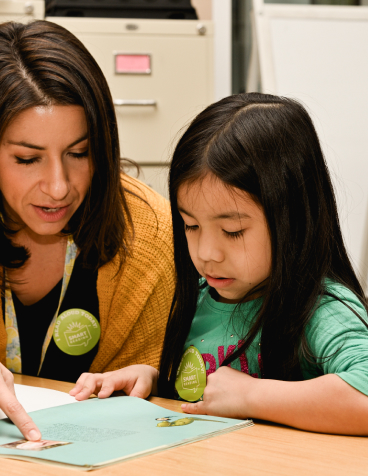
A: As a volunteer, we ask you to commit to providing a positive, affirming experience for all of the children you interact with at SMART. You’ll hear about our commitment to equity and inclusion from the first moment you fill out our volunteer application and throughout the training process. You’ll see books in your SMART site that represent a diverse array of topics, characters and authors, and part of our volunteers’ role is to support and affirm the books that kids are excited to read. We also offer many volunteer training resources, which can be accessed here.
Q: I don’t see racial diversity in my community. Why does SMART think this is important statewide?
A: While you may not think of Oregon as a particularly diverse state, our population continues to grow in size and racial and cultural diversity. Census data from 2020 reflects that nearly a quarter of Oregon’s population identifies as nonwhite – that’s over 1 million individuals. Among the student population, over 40% of the kids in Oregon public schools – more than 220,000 – are nonwhite. (Click here to view Oregon Department of Education enrollment reports.) Regardless of whether Oregon’s racial diversity shows up in your community, children and adults alike benefit from being exposed to cultures different from their own, fostering understanding and a respect for different perspectives. Our children are members of an increasingly global economy and world, and the extent to which they can learn about and understand people from different backgrounds from their own, the better equipped they’ll be to succeed.
Q: How is this important to our school partners?
A: The Oregon Department of Education has mandated that all schools adopt an “equity lens” – that is, to incorporate racial equity into decision-making and how education is administered to students. (Click here to read the ODE statement on equity.) Oregon schools are keenly aware of the education gap that exists between students of color, immigrants, migrants, those in rural communities, and those from low-income households, when compared to more affluent white students. As a result, schools are actively reviewing policies and practices through their equity lens to identify where there may be disparities and bias. Our efforts to prioritize equity at SMART have received positive feedback from our school partners, and we continue to work alongside them to address inequities to help ensure all children have an equal chance at success.
Q: How does SMART’s emphasis on equity influence other parts of the organization?
A: We prioritize equity across our organization, including in our approach to partnerships, fundraising, human resources policies, communications, and more. You can see concrete examples of how this shows up at SMART in our organizational equity statement and in our equity journey, which documents the progress we’ve made year-by-year in becoming a more inclusive organization.
Q: Do you provide training on equity and inclusion to volunteers?
A: Yes! We provide a wide range of training resources for our reading volunteers on our Reader Information Station. We also offer a series of online trainings that help equip volunteers to make their reading sessions with kids as impactful as possible. These include trainings on trauma-informed practices, science-based reading strategies, and the importance of inclusive books.
[1] Source: http://www.otlcampaign.org/otl-opportunity-gap